
Last Updated on June 7, 2026 by Mak Pastrana
The short version: 5 days is the right amount of time for Kyoto. Split your time between the main temple districts (Higashiyama, Arashiyama, Northern Higashiyama), one day trip to Nara, and half a day in Central Kyoto. If you’re coming from Osaka, you can do a focused one-day Kyoto itinerary hitting Fushimi Inari, Arashiyama, and Gion — all reachable in a single day on the JR Haruka or Shinkansen (15 minutes, ¥560 from Shin-Osaka).
This guide covers the complete 5-day itinerary with day-by-day plans, a one-day version for visitors based in Osaka, restaurant recommendations, the best Kyoto travel pass to get, and practical tips to keep you moving without wasting hours backtracking.
What’s in this guide:
- Practical Kyoto travel tips
- 5-day Kyoto itinerary (day-by-day breakdown)
- 1-day Kyoto itinerary from Osaka
- Kyoto travel pass: which one to get
- Best restaurants in Kyoto by area
- 5-Day Kyoto Itinerary: Day-by-Day Plan
- Day 1: Southern Higashiyama and Fushimi Inari
- Day 2: Arashiyama and Kinkaku-ji
- Day 3: Central Kyoto and Kurama
- Day 4: Nara Day Trip
- Day 5: Northern Higashiyama
- 1-Day Kyoto Itinerary from Osaka
- Kyoto Travel Pass: Which One to Get
- Best Restaurants in Kyoto by Area
- Kyoto Travel Tips
- Kyoto Travel Map: How the Districts Connect
- Frequently Asked Questions About Kyoto Travel
- Related Reading on RNTBLE
5-Day Kyoto Itinerary: Day-by-Day Plan
Is 5 Days Enough for Kyoto?
Yes. Five days gives you enough time to cover Kyoto’s four main districts — Southern Higashiyama, Arashiyama, Central Kyoto, and Northern Higashiyama — plus a day trip to Nara, without rushing. Seven or more days lets you go deeper (Fushimi Inari at dawn, a cycling day in Ohara), but five is the sweet spot for first-time visitors.
Quick reference: How many days for Kyoto?
| Time Available | Best Approach |
|---|---|
| 1 day (from Osaka) | Fushimi Inari + Arashiyama + Gion walk |
| 3 days | Higashiyama Day 1, Arashiyama Day 2, Northern Higashiyama Day 3 |
| 5 days | Full itinerary below — the recommended minimum |
| 7+ days | Add Ohara, cycling day, Kurama overnight, Nishiki deep dive |
Day 1: Southern Higashiyama and Fushimi Inari
Focus: Kyoto’s most iconic visual corridor, best done on foot from Kiyomizu-dera down through Gion, ending at Fushimi Inari before dusk.
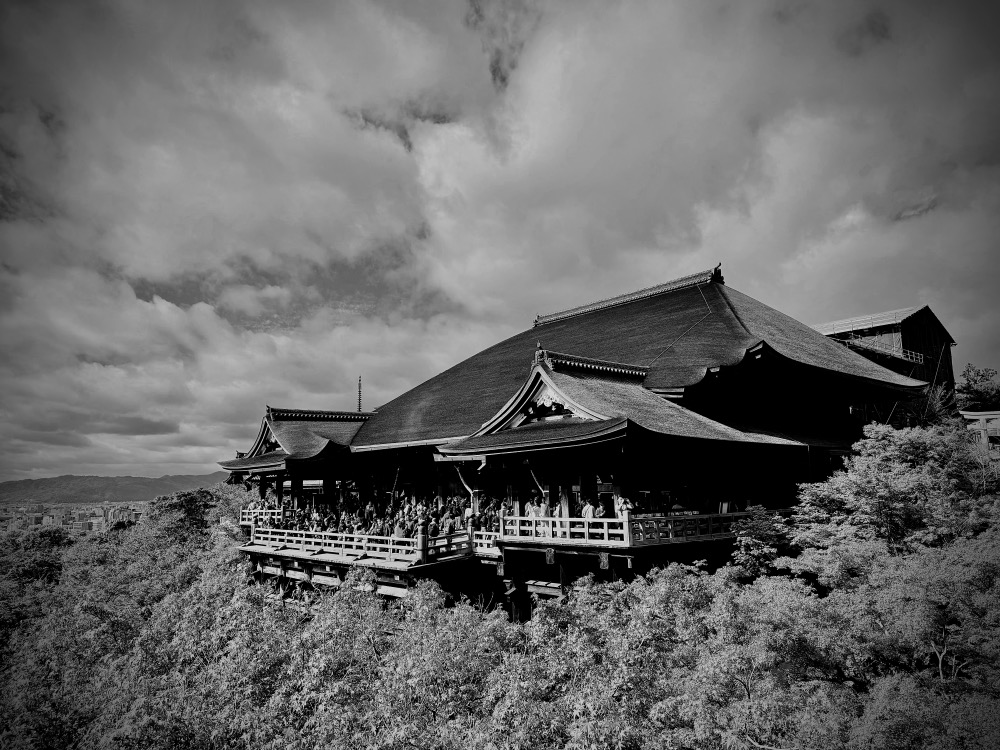
Start early. Kiyomizu-dera opens at 6am. Arriving before 8am means clear pathways and no tour group congestion on the main wooden terrace. By 10am it’s crowded.


Kiyomizu-dera Temple
One of Kyoto’s most recognizable landmarks — a UNESCO World Heritage Site built into the hillside with a massive wooden terrace offering city views. No nails used in the main hall structure. Admission ¥500, opens 6am, allow 45–60 minutes.
What most guides don’t mention: Walk past the main hall to Jishu Shrine (love deity shrine within the complex) and the Otowa waterfall, where three streams are said to grant longevity, success, or love depending on which you drink from. Kids love this.
Sannenzaka and Ninenzaka (Gion Historic District)


A 10-minute walk downhill from Kiyomizu-dera brings you to the preserved stone-paved lanes of Sannenzaka and Ninenzaka. Traditional wooden machiya townhouses now house matcha shops, ceramics, and Kyoto craft stores. Free to walk. Best photo light: morning, shooting uphill.
For your Kyoto restaurant stop: Gion has strong lunch options along Hanamikoji Street. Look for kaiseki set lunches (¥2,000–5,000 range) at restaurants like Gion Karyo or street-level yuba (tofu skin) at Yudofu Sagano. Avoid tourist trap set meals near the main path — the better food is one block off the main lane.
Yasaka Shrine
Free to enter, no closing time. Located at the east end of Shijo-dori where it meets Higashiyama. The orange-and-white complex is compact but atmospheric, especially at night when stone lanterns are lit. Worth 20–30 minutes if you’re passing through to Gion.
Fushimi Inari Taisha


Located 30 minutes south of Gion by train (Kintetsu Kyoto Line or JR Nara Line to Inari Station). Free to enter, open 24 hours. Famous for its thousands of orange torii gates winding up Mount Inari.
The honest assessment: Most visitors spend 45 minutes at the base trailhead and miss the real experience. The further up the mountain you go (2–4 hour full hike), the thinner the crowds get. Aim for the first major fork (Kumataka-sha) at minimum — 30–45 minutes up, genuinely different atmosphere from the entrance.
Arrive late afternoon for golden-hour light on the gates and cooler temperatures.
Day 1 Dinner: Kobe Beef Steak Moriya Gion (Higashiyama Ward) is one of the best food experiences in Kyoto — marbled Kobe beef grilled tableside, set in a traditional townhouse. Book ahead. Alternatively, Nishiki Market’s eastern entrance is open until 6pm for market food and street snacks.
Day 2: Arashiyama and Kinkaku-ji
Focus: Kyoto’s bamboo and river district, combined with the Golden Pavilion. These are on opposite sides of the city — start Arashiyama in the morning (less crowded), move to Kinkaku-ji in the afternoon.


Arashiyama Bamboo Grove
Free to enter, open year-round. The bamboo pathway is 200 meters long and takes 10 minutes to walk — but the experience is the light filtering through the canopy, not the length. Go before 8am if you want photos without other people in them. By 10am it’s wall-to-wall tourists. You can also rent a bicycle or a rickshaw to explore the area.
Tenryu-ji Temple
A UNESCO World Heritage Site and the most prestigious Zen temple in Arashiyama. Admission ¥500 (garden only) or ¥800 (with temple buildings). The pond garden, designed in the 14th century, has remained largely unchanged. Allow 45–60 minutes.
Togetsukyo Bridge (Moon Crossing Bridge)
The visual center of Arashiyama — a wooden bridge over the Hozu River with forested mountains behind it. Free to walk across. Best light: morning. In autumn (late November), the maple foliage turns the hillside orange and red, making this one of Kyoto’s best fall foliage spots.
Arashiyama Monkey Park Iwatayama
Requires a 20-minute uphill hike to reach. Admission ¥550 adults, ¥250 children. Home to 120+ wild Japanese macaques. Panoramic views of Kyoto from the top. Good for families with kids; the monkeys are habituated to humans and will approach for food (buy inside the park, not outside).
Kinkaku-ji Temple


Admission ¥500, opens 9am. One of Japan’s most-photographed buildings — a 14th-century Zen temple with its top two floors covered in gold leaf, reflected in the surrounding pond. Allow 30–45 minutes. The grounds are compact and crowds move through quickly.
Tip: Kinkaku-ji pairs well with Ryoan-ji Temple (10 minutes away by taxi), which has Japan’s most famous rock garden. Admission ¥600.
Day 2 Dinner: Arashiyama has good tofu restaurants along the riverside. Shigetsu (inside Tenryu-ji) does shojin ryori (Buddhist vegetarian cuisine) at lunch. For dinner, Kiyamachi-dori near the Kamo River has a row of restaurants with good range — everything from yakitori to soba.
Day 3: Central Kyoto and Kurama
Focus: Kyoto’s urban core and a contrast day — feudal castle and palace in the morning, mountain hot spring village in the afternoon.
Nijo Castle


Admission ¥1,300, opens 8:45am. A UNESCO World Heritage Site with the famous “nightingale floors” — interlocking floorboards designed to squeak when walked on, warning of intruders. The Ninomaru Palace interiors (original 17th-century) are genuinely worth seeing. Allow 1.5–2 hours.
Kyoto Imperial Palace
Free to enter (reservation not required since 2016). Guided tours in English run 10am and 2pm daily, last 50 minutes. The palace grounds are more impressive than the buildings themselves — the Gosho (palace) is a series of formal structures with raked gravel courtyards. Good for history context; less visually spectacular than Nijo Castle.
Nishiki Market
Kyoto’s covered food market — 400 meters long, 100+ stalls. Open 9am–6pm most days. Best for food tourism: try the pickles (tsukemono), grilled skewers, fresh mochi, and dashi-rolled tamago (egg). This is where locals shop; it’s also genuinely crowded by noon. Go before 11am for elbow room.
Best Kyoto restaurants near Nishiki Market: The adjacent Teramachi shopping street has ramen, udon, and lunch sets at good prices. Kyoto ramen (lighter, soy-based broth) differs from Osaka or Tokyo styles — Gogyo Kyoto on Nishiki Koji is worth the line for their burnt miso ramen.
Kurama Village: Temple and Onsen
Take the Eizan Railway from Demachiyanagi Station to Kurama (30 minutes, ¥430). Kurama Temple sits at the base of a mountain — hike 30 minutes to the main shrine through cedar forest. Admission ¥500.
After the temple, soak at Kurama Onsen (¥1,200 for outdoor bath, ¥2,500 for indoor + outdoor). The outdoor baths look directly into forested mountain — a completely different texture from the city.
Get back to Kyoto by 7pm — Kurama has limited dinner options..
Day 4: Nara Day Trip
How to get there: JR Nara Line from Kyoto Station to Nara Station, 45 minutes, ¥720 each way. Runs every 30 minutes. An IC Card (Suica or ICOCA) handles this automatically — no need to buy a separate ticket.


Time to spend: Half-day is enough to see the core. Full-day if you want to extend into Naramachi (traditional merchant district) or Horyuji Temple.
Todai-ji Temple
Admission ¥800. Home to Japan’s largest bronze Buddha statue (15 meters tall) inside the Daibutsuden Hall, which is the largest wooden structure in the world by floor area. Genuinely impressive at scale. Allow 45–60 minutes including the walk through the temple complex.
The deer: Nara Park’s 1,200+ free-roaming deer will approach you looking for shika-senbei (deer crackers, ¥200 from vendors). They bow before taking food. Some are aggressive about it — hold bags at your side, not in front.
Nara Park
Free to enter. Walk from Nara Station to Todai-ji takes 20 minutes through the park. The route passes Kofuku-ji Temple (the five-story pagoda is a landmark) and the main deer congregation areas.
Kasuga Taisha Shrine
Free outer grounds, ¥500 inner shrine. Famous for 3,000 stone and bronze lanterns lining the forested paths. Best seen in February or August when the lanterns are lit for the Lantern Festival — otherwise the moss-covered stone lanterns are still atmospheric.
Nara National Museum
Admission ¥700, closed Mondays. Strong collection of Buddhist sculpture and artifacts from the Nara period (710–794 AD). Good context for everything you’ve seen in Kyoto and Nara’s temples. Allow 1–1.5 hours.
Nara restaurants: Narazuke (vegetables pickled in sake lees) is the local specialty — pick some up at Nara Station before returning. For lunch, the streets between Kintetsu Nara Station and Kofuku-ji have strong options including kakinoha-zushi (sushi wrapped in persimmon leaves, ¥1,000–1,500 for a set).
Day 5: Northern Higashiyama
Focus: The quieter, more meditative half of the Higashiyama district. Fewer crowds than Day 1’s southern section, better for photographers and people who want space to actually look at things.
Walk the Philosopher’s Path (Tetsugaku-no-Michi) — a 2km canal-side path connecting Ginkaku-ji to Nanzen-ji. In spring it’s lined with cherry blossoms; in autumn, maples. Year-round it’s the best walking route in Kyoto for unhurried sightseeing.
Ginkaku-ji Temple (Silver Pavilion)
Admission ¥500, opens 8:30am. Confusingly named (it was never actually covered in silver), but the garden design is exceptional — a raked sand garden with a cone-shaped “moon-viewing platform” (kogetsu-dai) is one of the most recognizable images in Japanese landscape design. Allow 30–45 minutes.
Start here and walk south along the Philosopher’s Path to reach Nanzen-ji.
Nanzen-ji Temple
One of Kyoto’s most important Zen temples, free to enter the grounds (sub-temples and buildings ¥300–600). The Sanmon Gate (¥600) is worth climbing for the elevated view of the temple complex and city. The incongruous brick aqueduct (built 1890) running through the temple grounds is photographically interesting — industrial infrastructure in the middle of a 13th-century temple.
Eikan-do Zenrin-ji Temple
Admission ¥600. Best in late November when the maple trees turn and the temple grounds are illuminated at night (¥600 for evening entry, separate ticket). During non-autumn seasons, the multi-story pagoda views are still worth a 30-minute stop.
Heian Shrine and Garden
Free outer grounds, ¥600 for the stroll garden. The shrine was built in 1895 as a replica of the original Imperial Palace — architecturally precise, not ancient, but visually grand. The garden (open 8:30am–5:30pm) includes a 33,000 sqm traditional Japanese garden with a large pond, covered bridge, and seasonal flowers.
Day 5 Dinner: Pontocho Alley — a narrow lane running parallel to the Kamo River — is Kyoto’s best concentrated strip of restaurants. Open-air riverside decks (yuka) operate May through September. Walk the full length before choosing; quality varies but the atmosphere is consistent.
1-Day Kyoto Itinerary from Osaka
Best for: Day-trippers staying in Osaka who want to see Kyoto’s highlights in a single day.
Getting there from Osaka: JR Special Rapid from Osaka Station to Kyoto Station, 28 minutes, ¥580. Runs every 15 minutes. The fastest option without the Shinkansen price. Alternatively, Shinkansen from Shin-Osaka to Kyoto is 15 minutes but costs ¥1,420 — not worth it for the time saved.
Leave Osaka by 7:30am. You need a full day — 10 hours is enough; 8 hours is tight.
One Day Kyoto Itinerary: The Route
| Time | Stop | Notes |
|---|---|---|
| 9:00am | Fushimi Inari Taisha | Hike to first major torii gate section (45 min). JR Nara Line from Kyoto Station to Inari, 5 min. |
| 10:30am | Arashiyama Bamboo Grove | 30 min by bus or taxi from Fushimi (Bus 17 or Randen Tram). Walk the grove, cross Togetsukyo Bridge. |
| 12:30pm | Lunch in Arashiyama | Tofu restaurants near Tenryu-ji, ¥1,500–3,000 range. |
| 2:00pm | Kinkaku-ji (Golden Pavilion) | 20 min taxi from Arashiyama. Allow 45 min. |
| 3:30pm | Nijo Castle | 15 min bus from Kinkaku-ji. Allow 1.5 hours. |
| 5:30pm | Gion / Hanamikoji Street | 20 min bus to Gion. Walk Hanamikoji, Shinbashi area, Yasaka Shrine. |
| 7:30pm | Dinner in Gion | Before returning to Osaka. |
| 9:00pm | Return to Osaka | 28 min JR from Kyoto Station. |
What you’ll miss in one day: Northern Higashiyama, Nishiki Market, Kurama, and any slow meandering. This is an efficient highlights route, not an immersive trip. Five days is what you need for the real thing.
Kyoto Travel Pass: Which One to Get
Short answer for most visitors: Get an IC Card (Suica or ICOCA), not a dedicated Kyoto day pass.
| Pass | Cost | Best For | Coverage |
|---|---|---|---|
| IC Card (Suica/ICOCA) | ¥500 deposit + balance | Everyone — most flexible | All Kyoto buses, subways, JR trains, convenience stores |
| Kyoto City Bus & Subway 1-Day Pass | ¥1,100 | Heavy bus users | City buses + subway only |
| Kyoto City Bus & Subway 2-Day Pass | ¥2,000 | 2-day sightseers | City buses + subway only |
| JR Kansai Area Pass (1-4 days) | ¥2,400–¥6,400 | Osaka-Kyoto-Nara multi-city trips | JR trains in Kansai region |
| Japan Rail Pass | From ¥50,000 (7 days) | Long Japan trips (Tokyo + Kansai) | All JR nationwide |
For the 5-day Kyoto itinerary: An IC Card covers everything. Top it up at any station. The Bus & Subway day pass only makes sense if you’re doing 3+ bus rides in a day — at ¥230 per bus ride, you need 5 rides to break even on the 1-day pass.
For day trips from Osaka: The JR Kansai Area Pass covers Osaka-Kyoto-Nara-Kobe trains if you’re making multiple day trips. Otherwise, individual JR tickets on an IC Card are cheaper for a single Kyoto day trip.
Best Restaurants in Kyoto by Area
Kyoto cuisine (Kyo-ryori) emphasizes seasonal vegetables, tofu, and subtle dashi-based broths. It’s lighter and more refined than Osaka food. Here’s where to eat in each area:
| Area | Best For | Recommended | Price Range |
|---|---|---|---|
| Gion / Higashiyama | Kaiseki, wagyu beef | Kobe Beef Steak Moriya Gion, Gion Karyo | ¥3,000–10,000+ |
| Arashiyama | Tofu cuisine, shojin ryori | Shigetsu (inside Tenryu-ji), Yudofu Sagano | ¥1,500–5,000 |
| Nishiki Market | Street food, market lunch | In-market stalls, Gogyo Kyoto (ramen) | ¥500–2,500 |
| Pontocho Alley | Atmosphere, varied cuisine | Riverside yuka restaurants (May–Sep) | ¥3,000–8,000 |
| Central Kyoto | Ramen, everyday lunch | Gogyo Nishiki Koji (miso ramen), Teramachi sets | ¥800–2,000 |
| Kurama | Soba, mountain-style | Limited options — eat in Kyoto before/after | ¥1,000–2,500 |
Kyoto restaurant booking tip: Kaiseki restaurants require reservations 2–4 weeks ahead, especially on weekends. For lunch kaiseki (cheaper, less formal), same-day reservations are often possible. Tabelog Japan or Google Maps Japan are more reliable than TripAdvisor for Kyoto restaurant research — search in Japanese characters (京都 kaiseki おすすめ) for better local results.
Kyoto Travel Tips
Transportation:
- Get an IC Card (Suica or ICOCA) before leaving Tokyo or at Kyoto Station. Works on all buses, the subway, and convenience store payments.
- Kyoto’s bus system covers most sightseeing areas. Key routes: Bus 100 (Kyoto Station to Gion to Silver Pavilion), Bus 101/205 (Kyoto Station to Kinkaku-ji to Arashiyama).
- Rent a bicycle for the Philosopher’s Path and Northern Higashiyama — 2–3 hours flat or gentle terrain. Multiple rental shops near Kyoto Station, ¥1,000–1,500/day.
- Taxis are metered and plentiful but expensive. Short hops (10–15 min) run ¥800–1,500.
Timing:
- Cherry blossom season (late March–early April) and autumn foliage (mid-November) are peak crowds and peak prices. Book accommodation 3–4 months ahead.
- July–August is hot (35°C+) and humid. Most temples are open but physically uncomfortable.
- Best months for comfortable weather with manageable crowds: May and October.
Money:
- Many traditional restaurants and smaller shops are cash-only. Carry ¥10,000–20,000 in cash per person per day.
- 7-Eleven and Japan Post ATMs reliably accept foreign cards. Convenience stores (konbini) are everywhere.
Customs and etiquette:
- Remove shoes when entering tatami rooms in temples and traditional restaurants (look for the threshold and slippers provided).
- Photography is generally allowed outside but often restricted inside temple buildings — look for signs.
- Tipping is not customary and may be refused.
- Temple grounds are technically religious sites, not photo sets — quiet behavior is appropriate even if crowds don’t model it.
Kyoto Travel Map: How the Districts Connect
Understanding Kyoto’s geography saves hours of backtracking. The city is shaped by mountains on three sides and a grid street plan in the center.
Five zones you need to know:
| Zone | Location | Key Sites | Best Transport |
|---|---|---|---|
| Kyoto Station | South-center | Toji Temple, Fushimi Inari (nearby) | Hub — all trains/buses depart here |
| Southern Higashiyama | East, lower | Kiyomizu-dera, Gion, Yasaka Shrine | Bus 100 or 206 from Kyoto Station |
| Arashiyama | West | Bamboo Grove, Kinkaku-ji nearby | Bus 11 or Sagano Line from Kyoto Station |
| Central Kyoto | Center | Nijo Castle, Imperial Palace, Nishiki | Subway Tozai Line (east-west) |
| Northern Higashiyama | East, upper | Ginkaku-ji, Nanzen-ji, Philosopher’s Path | Bus 100 from Kyoto Station |
Day trip logistics:
- Nara: JR Nara Line from Kyoto Station, 45 min south
- Osaka: JR Special Rapid from Kyoto Station, 28 min west
- Both can be done in a single day from Kyoto base
Frequently Asked Questions About Kyoto Travel
How many days should I spend in Kyoto?
Five days is the recommended minimum for a first visit. This covers the four main sightseeing districts and includes a day trip to Nara without rushing. Three days is workable if you prioritize and skip the day trip. Seven days lets you add Ohara, cycling, and a slower pace.
Is a day trip to Kyoto from Osaka worth it?
Yes, for a highlights-only visit. The JR Special Rapid gets you from Osaka to Kyoto in 28 minutes for ¥580. A focused one-day route hitting Fushimi Inari, Arashiyama, Kinkaku-ji, and Gion is achievable if you start by 7:30am. That said, Kyoto rewards slower travel — if you have 3+ days in Kansai, stay in Kyoto rather than commuting from Osaka.
What is the best Kyoto travel pass?
For most visitors, an IC Card (Suica or ICOCA) is the best option. It covers all Kyoto buses, the subway, and JR trains, and works at convenience stores. The Kyoto Bus & Subway day pass only saves money if you make 5+ bus rides in a single day. The JR Kansai Area Pass is worth it for multi-city trips covering Osaka, Kyoto, Nara, and Kobe.
What is the best time to visit Kyoto?
May and October offer the best weather with manageable crowds. Cherry blossom season (late March–early April) and autumn foliage (mid-November) are the most spectacular visually but also the most crowded and expensive. Avoid mid-August unless you’re comfortable with 35°C heat.
How do I get from Osaka to Kyoto?
The fastest affordable option is the JR Special Rapid from Osaka Station to Kyoto Station — 28 minutes, ¥580, runs every 15 minutes. The Shinkansen from Shin-Osaka is faster (15 minutes) but costs ¥1,420 and isn’t worth the premium for one leg of travel. The Hankyu Limited Express (Osaka Umeda to Kyoto Kawaramachi) is ¥410 and takes 44 minutes.
What are the best restaurants in Kyoto?
For a splurge: kaiseki (multi-course traditional cuisine) in Gion or Pontocho, ¥5,000–15,000 per person. For everyday meals: Nishiki Market for lunch street food, Teramachi Street for ramen and set lunches under ¥1,500. Kobe Beef Steak Moriya Gion stands out for a one-time high-value dinner. Book kaiseki restaurants 2–4 weeks in advance.
Is Kyoto good for families with kids?
Yes, with planning. Best spots for kids: Nara’s free-roaming deer, Arashiyama Monkey Park, Fushimi Inari’s hike, and Nijo Castle’s nightingale floors. Long temple-visiting days wear young children out quickly — structure each day around one active experience and one visual highlight, not four temple visits in a row.
Related Reading on RNTBLE
- Bali Holiday with Kids: Best Time, Beaches & Family Activities
- Travel Guide: The Best Time to Visit Bali
- Sundays Beach Club Review: Bali’s Best Beach Experience
- Chapung Sebali: A Luxurious Jungle Retreat in Ubud
